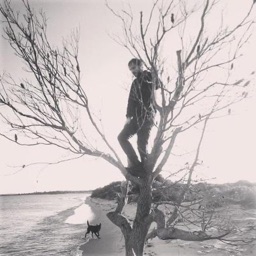
 HO
HOHugo O'Connor
Trust engineering
R&D engineer with a background in applied cryptography and supply-chain integrity. Co-founder of Bit Trade (acquired by Kraken). Enjoys making and creating things for and with other people, for good purpose.
Applied R&D cooperative
We build secure, cybernetic tools that help people, teams, and organisations adapt under pressure, and learn to steward the world we're part of.
The wound
Optimised for speed and scale, they extract more than they sustain. They watch more than they serve, turning relationships into data to be captured and sold. Knowledge bases swell into noise. Organisations harden under the very pressure they were built to absorb. The tools meant to help us respond train us to react faster and understand less. Then we add AI, and the whole thing accelerates.
The choice
A living system senses itself and responds. That's not luck. It's a property you can design into the things you build, or strip out of them.
Three Horizons · Bill Sharpe / IFF
Horizon 1
The dominant system: dead, extractive, losing fit.
Horizon 3
The viable future: living systems, aliveness, stewardship.
Horizon 2: the transition
Cybernetic R&D: carrying pockets of the future into the mainstream.
Horizon 1
1The systems we built for speed and scale are losing their fit with a living world.
Horizon 3
3Pockets of a different future already exist as living systems, growing.
Horizon 2: the transition
2The transition is the work: carrying aliveness from the margins to the mainstream.
The systems we built for speed and scale are losing their fit with a living world.
But pockets of a different future already exist as living systems, growing.
The transition is the work: carrying aliveness from the margins to the mainstream.
Integrity
So everything we build is secure by construction: cryptographic identity, formal verification, zero-knowledge proof. Trust you can check, not trust you have to hope for. No surveillance, no bearer tokens, no capture.
How we work
We build these tools, use them ourselves, and learn from the work. The cooperative is a living system running on its own living tools.
Shared documents, visible decisions, open code.
If it doesn't hold for us, it doesn't ship.
The human pace is the rate limit, by design. Not AI throughput.
What we've built
Open-source, patent-free, in the commons. A living stack, each layer an instance of the practice.
Defeasible reasoning: rules that hold their exceptions and revise under new evidence, rather than mistaking a rule for the truth.
A formally verified agent communication language, with routing that turns ordinary processes into accountable agents.
A knowledge garden that grows and prunes. Memory that surfaces what's relevant as you work. Structured data with no model lock-in.
Heart-rate variability as research data, and an AI harness that moves at the speed people can integrate. Pull-only, never extractive.
Zero-knowledge biometric authentication. Verify your identity without ever revealing the biometric itself.
Feedback & signal
To listen, not control. The point of a living tool is the relationship it keeps with what it touches.
People
Different disciplines, one conviction: that what we build should nourish people, communities, and the planet.
HOHugo O'Connor
Trust engineering
R&D engineer with a background in applied cryptography and supply-chain integrity. Co-founder of Bit Trade (acquired by Kraken). Enjoys making and creating things for and with other people, for good purpose.
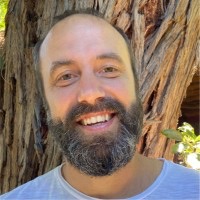 MM
MMMathew Mytka
Cybernetics and trust
Imagineer, tech ethicist, educator and designer. Studies how AI integration shapes adaptive capacity, and how trust gets designed into tech and governance. Known to converse with ravens and occasionally rap.
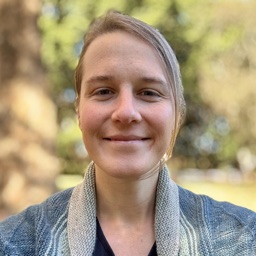 CB
CBClaire Barnes
Systems engineering
Software and systems wrangler, often thinking about how we can better manage complexity in tech. Loves simple, well-crafted tools designed with humans in mind. Can be found foraging for mushrooms or making strange noises with synthesisers.
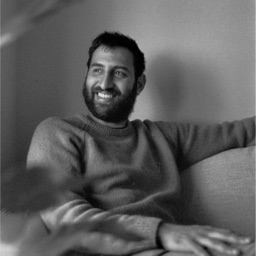 DF
DFDave Factor
Automation engineering
Specialises in designing and implementing automated systems to improve efficiency and reliability. A philosopher of machines and human interaction, and makes great sourdough too.
 VW
VWViveka Weiley
Strategic design
Designer and research convenor. Leads CSIRO's Concept Lab, where creative intelligence is grown alongside scientific discovery. Twenty-five years across participatory design, interactive geovisualisation, AI/ML, and XR. Keeps sharp tools for sashimono and the sea.
Our founding team has worked with










Work with us
We work with organisations feeling the strain. We help them sense what's actually happening, build tools that hold under pressure, and stay in it until the work lands.
Loading repository statistics…
Explore the tools and recent work →Anuna Research · Open software · Patent-free · Non-distributing